Your marketing has outgrown your team. But you’re not ready for a $250K (or more) CMO or COO. A fractional executive is the smart move.

You’ve outgrown your home-grown marketing, but you’re not ready (or able) to commit $250K+ to a full-time CMO or COO. There’s a solution for that gap. It’s where a fractional CMO or COO comes is.
Challenger to Category Leader: The Marketing and Operations Shifts That Matter

Most challenger CPG and consumer appliance brands stall because they keep operating like insurgents long after the insurgency phase has paid off. Moving from niche to category leader requires a deliberate shift in behavior, not just more SKUs or sales channels. Here are the actions that matter most.
Most businesses under $100M don’t need a COO
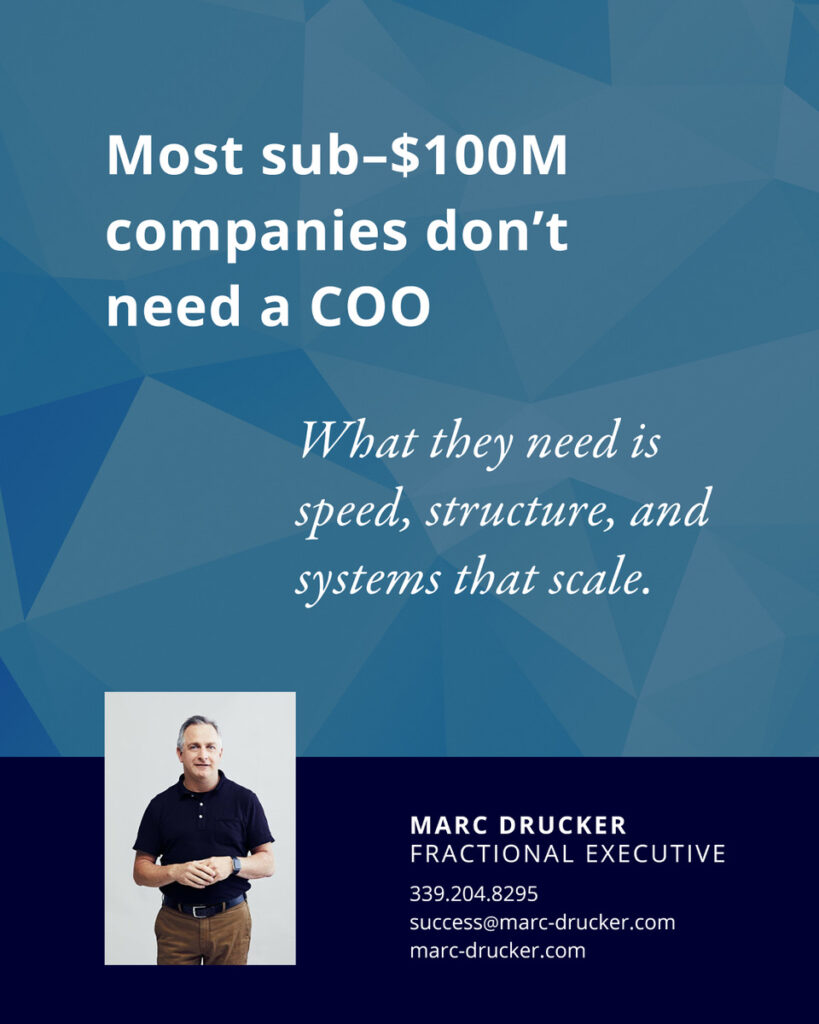
Most businesses under $100 million don’t need a COO.
In fact, in many, if not most, cases a COO would slow down decision-making, add unnecessary cost, confuse reporting lines, and generally be a drag on the business.
But a Fractional or Interim COO like me, that’s a different story.
Why $10–100M companies need cross-functional fractional and interim executives
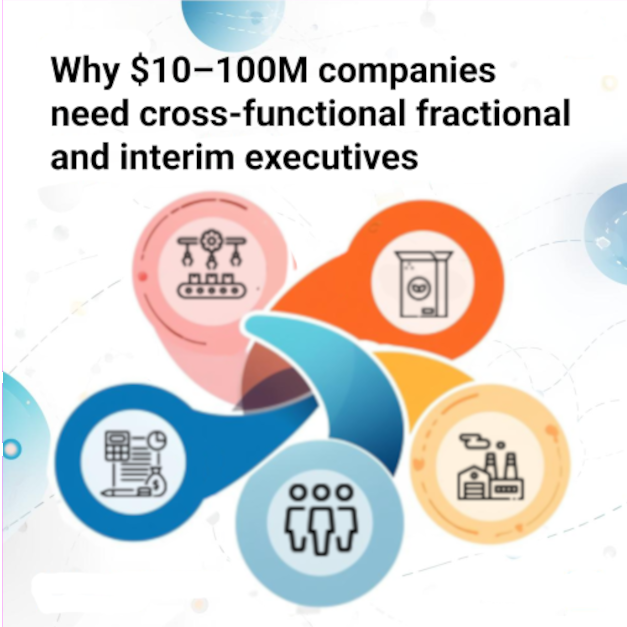
Most founders/CEOs of companies between $10M – $100M think their problems sit in one bucket: Sales, Manufacturing, Operations, People, Finance. But the truth? Those buckets are linked.
Most CPG founders only think they’ve made it when they reach $20M. But the real achievement isn’t $20M it’s $2M.
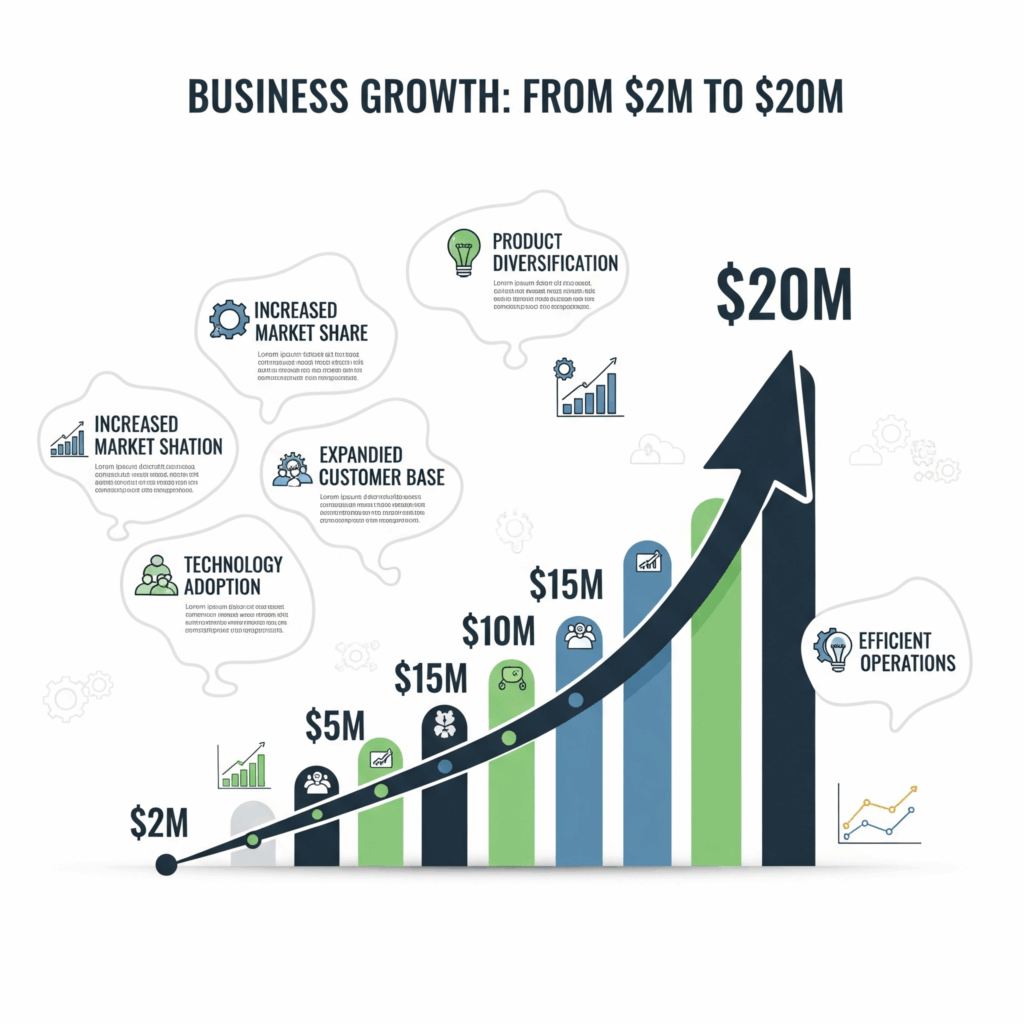
Most CPG founders only think they’ve made it when they reach $20M. But the real achievement isn’t $20M it’s $2M.
Scaling Without Bloat

Scaling Without Bloat Requires an Owner Mindset A leader’s way of working is shaped by what brought them success in the past. Executives who come from large companies know how to lead managers, navigate complex org charts, and delegate through layers. They know how to manage complexity, policies, and politics while achieving organizational goals. But […]
Ops Is How Innovation Thrives
Innovation captures headlines, but it’s business operations that determine whether those ideas scale—or stall. While everyone loves the energy of ideation, few are eager to dive into the mechanics of execution.
Navigating Innovation During Turbulence

To thrive during an economic turbulence, companies must change their innovation strategy. Budgets must be cut while continuing to invest in innovation. The key is having a balance and making strategic shifts. This approach can help companies emerge as leaders.
Money Can Be the Fastest Way to Zero

Cash is king—or so the adage goes. But for many leaders, an influx of capital doesn’t improve their company, rather it accelerates their demise.
Embracing AI in Innovation

There is no doubt that AI will transform how innovators work, collaborate, and innovate. It will shape innovation itself both in terms of what is created and how it is practiced. AI is creating transformative opportunities for innovation leaders who must adapt quickly or risk being left behind.